Out of production, drawn by Gérald Genta, traded at auction like a contemporary painting: what makes the 5711 the blue-chip reference of the 2020s.
In January 2021 Thierry Stern announced that the Patek Philippe Nautilus 5711/1A-010 would leave production by the end of the year. It was the start of the most violent run ever recorded on a contemporary reference. In 11 months the secondary-market price went from €90,000 to €240,000. On 1 June 2022 an identical unworn example with full set was hammered by Phillips New York at $268,500. No Rolex, AP, F.P. Journe or Vacheron reference has ever followed a comparable trajectory.
The correction of 2023-2025 brought the 5711 back to the €155,000-180,000 range — still an enormous premium over the 2021 boutique list price of €35,000, but with secondary-market liquidity no other modern watch can match. A 5711 in full-set condition, with original papers and box, sells within 7-14 days through any specialist European dealer. Transaction volume runs at roughly 40 pieces a month across the main authorised marketplaces.
What makes the 5711 different from any other watch? Five factors converge in a way nothing else replicates. First, imposed scarcity. Patek produced roughly 5,500-6,500 examples a year over the reference's last five years of life, against 12,000-15,000 units a year for the white-dial Rolex Daytona. Fewer pieces in circulation means more price elasticity on the upside.
Second, the Gérald Genta signature. In 1976 Genta drew the Nautilus in 45 minutes on a napkin at the Beau-Rivage in Basel: an octagonal design with a ship's-porthole bezel, an integrated bracelet and a horizontal Grande Tapisserie dial. Fifty years later, every integrated steel watch designed anywhere in the world — from Chopard's Alpine Eagle to H. Moser's Streamliner — is a conscious tribute to that pencil. The 5711 is its purest and longest-marketed evolution.
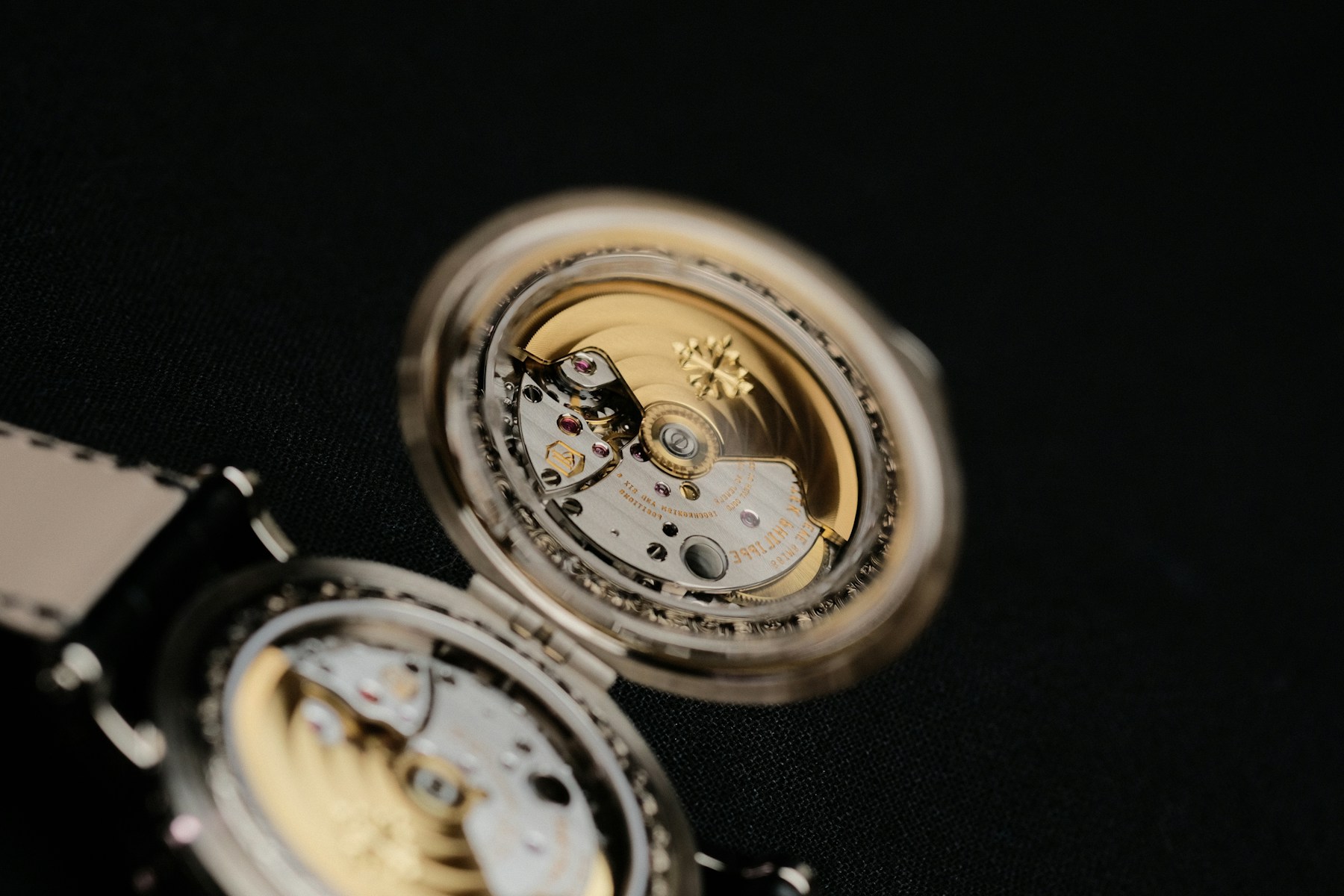
Third, the in-house calibre 26-330 S C. The 5711's movement is technically sober — a 4Hz automatic with 45 hours of reserve — but its finishing sits at the very top of industrial haute horlogerie. A 21K gold oscillating weight hand-guillochéd, bridges with diagonal Côtes de Genève, hand-burnished screws, internal angles hand-chamfered. Every single movement takes 60-80 hours of painstaking work in Patek's Plan-les-Ouates workshops.
“The 5711 is no longer just a watch. It is an asset with documented volatility, deep liquidity and a price history no other contemporary reference can claim.”
Fourth, the Patek Philippe Seal. Introduced in 2009, the Seal holds standards stricter than COSC (–3/+2 seconds a day against –4/+6), covers the entire finished watch rather than the movement alone, and guarantees unlimited service life: any Patek made from 1839 onwards can still be repaired with original parts at the Geneva Service Centre. That is a value no modern brand can genuinely offer.
Fifth, cultural positioning. The 5711 is not only wanted by collectors. It became a pop icon on the wrists of Jay-Z, LeBron James, Kylian Mbappé, Ed Sheeran, Kanye West and Prince William. The blue 5711 is the most photographed watch in the world on Instagram, with more than 1.8 million posts under #patek5711. That cultural demand is decoupled from the luxury cycle — it does not answer to economic swings the way a Vacheron Overseas or a Chopard Alpine Eagle does.
On pure investment terms, Chrono24 and WatchCharts data show annualised volatility of 28% over 2023-2025 — high for a collectible, but perfectly in line with physical gold (22%) and far below cryptocurrency (65%). The 5711's average compound return from 2012 to 2026 is +18.4% CAGR, ahead of the S&P 500 (+12.1%) and gold (+7.3%) over the same period. Past returns, obviously, do not predict future ones: 2021 was an anomaly unlikely to repeat.
The main risk of the 5711 as an investment is concentration. A single event — say a Patek decision to reintroduce a similar version — could cut the 5711's value by 30-40% in a matter of weeks. Portfolio discipline suggests never exceeding 15-20% allocation on a single reference, however blue-chip it looks.
The olive-green 5711/1A-014 (2021, the final official version) remains the most coveted piece: 170 examples made, valued today between €380,000 and €450,000. The blue 5711/1A-010 (2006-2021) is the most liquid reference — the obvious choice for anyone entering the Nautilus market without paying speculative premiums on limited editions.
If you are weighing a 5711 as a first investment piece, our PDF guide "The Watch Investment Playbook" devotes 12 pages of technical analysis to the reference, with auction data, comparisons against the Royal Oak 15202 and an advanced authentication checklist. Before signing a cheque for €180,000, that reading earns its percentage.
Consulenza pre-acquisto
Stai valutando un acquisto sopra i 15.000 €? Fatti affiancare da chi ne ha visti passare centinaia.
Videocall registrata, report PDF con valutazione e checklist di autenticità. Rimborso 100% nei primi 15 minuti.