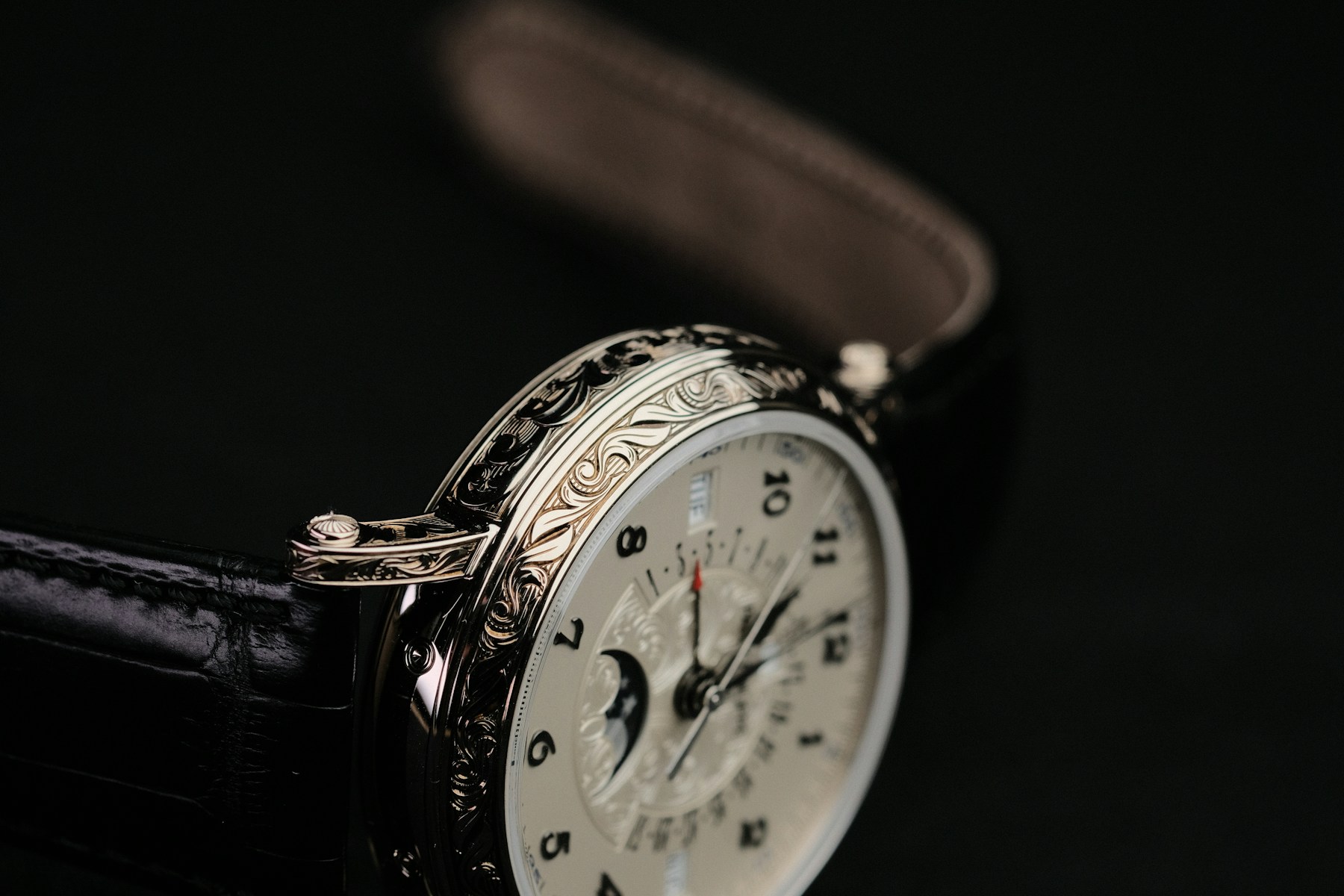
Patek's first perpetual calendar with an in-line display is more than a technicality: it is a lesson in legibility.
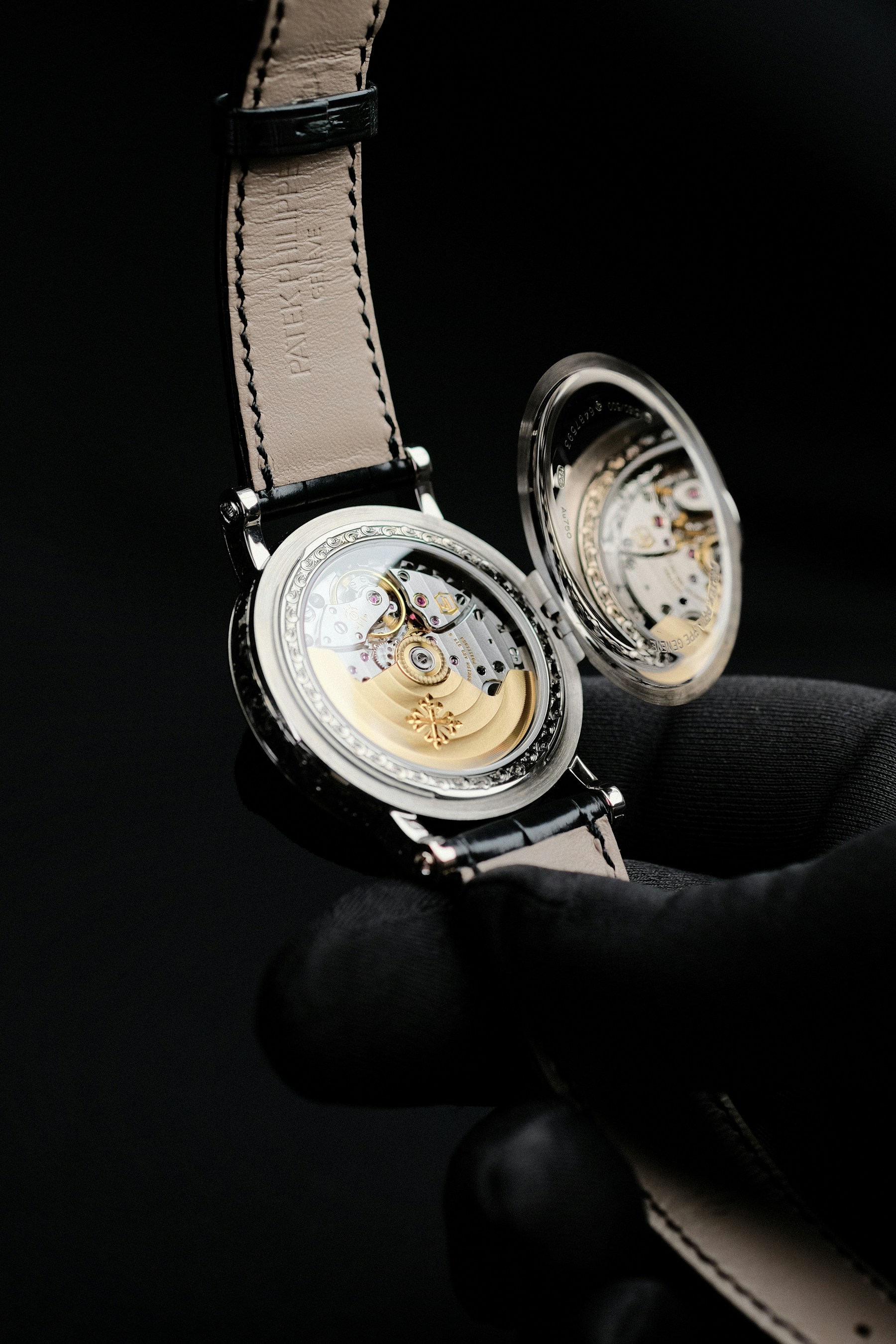
The calibre 31-260 PS QL — developed specifically for the 5236P — combines a perpetual calendar, central seconds and an in-line display of day, date and month. Seven years of development to align three indications on a single visual plane without pushing the movement beyond 4.07 mm thick. The result is the most legible dial Patek has ever produced.
The engineering challenge of an in-line display is less trivial than it looks. A traditional perpetual calendar uses three separate sub-dials — one for day, one for date, one for month — because each has a different speed and jumping mechanism. Putting them in line means designing a system of coaxial discs with differentiated increments and a single reading plane beneath one horizontal aperture. Patek came close in 1972 with the ref. 3448, but never solved the problem in a truly elegant way.
The 41.3 mm platinum case stays discreet thanks to tapered lugs and a contained thickness of 11.07 mm. The blue grained dial with white gold transfers is an exercise in subtraction: no sub-dials, no forced symmetry, no power-reserve indicator to ruin the proportions. Only the moon phase at six o'clock — necessary in a perpetual — and the diamond that identifies platinum, also at six.
“The 5236P is not for impatient collectors. It is for those who have already understood that real complications are worn for twenty years.”
Boutique price: €141,000. Wait: indefinite. Patek does not publish lists, but 'top 100' clients with purchase history across Nautilus and Aquanaut manage to get one within 12 to 18 months. Anyone entering Patek today can realistically aim at the 5236P in six to eight years, after passing through at least three or four purchases on lesser references: Calatrava 6119G, Complications 5205G, Twenty~4 automatic.
On the secondary market the 5236P has shown an interesting anomaly. In its first two years after launch (2021-2022) it traded at €260,000-290,000, a 100% premium over list. Then the 2023-2025 correction brought prices down to €180,000-200,000, still well above boutique but with a reasonable delta for anyone unwilling to wait out the list.
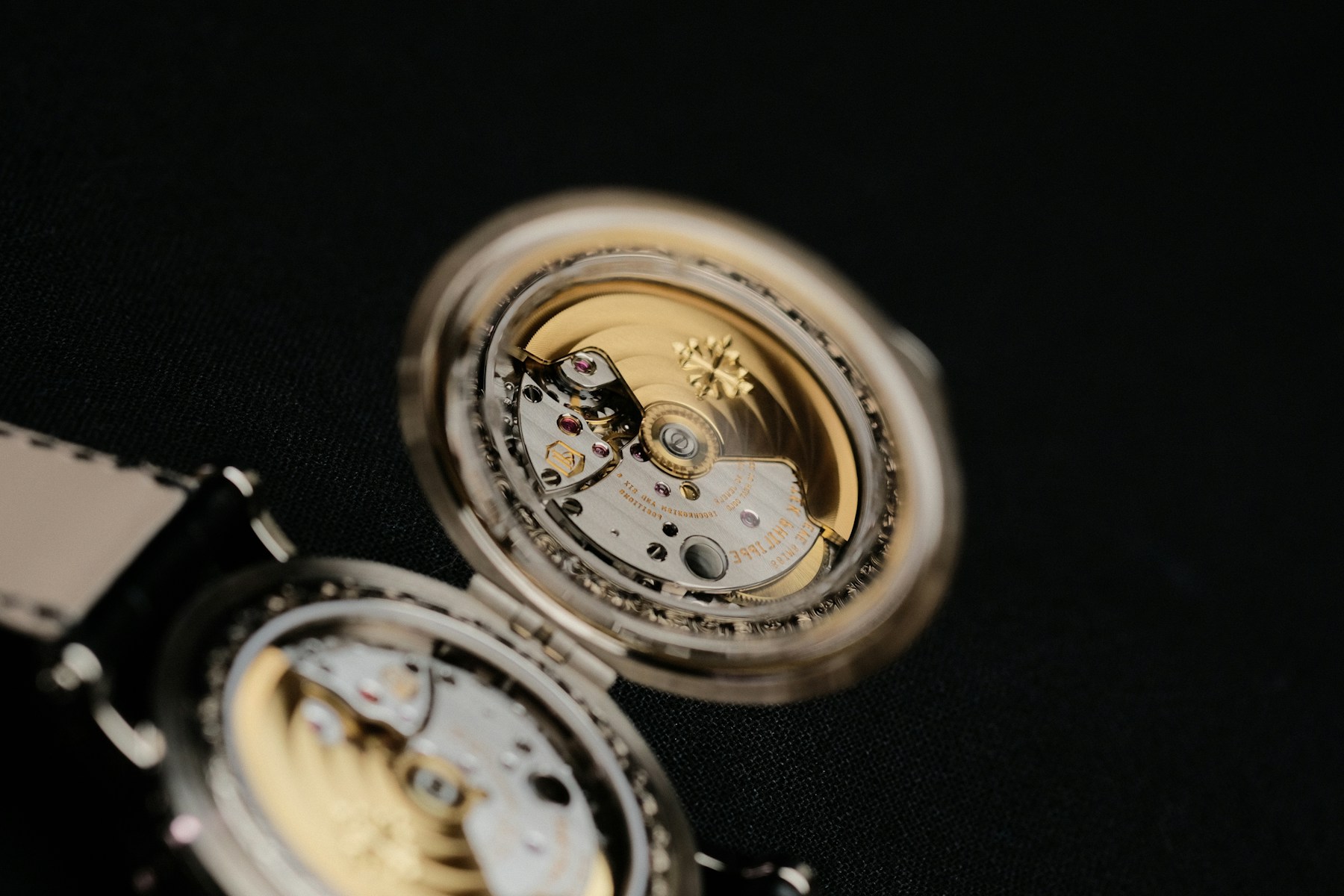
The 5236P's real merit is not technical. It is philosophical. It is proof that after a century of perpetual calendars the most prestigious manufacture in Geneva can still ask itself 'how is a calendar actually read on the wrist?' and find a new answer. Not a marketing stunt, not an added complication. A rewriting of what already existed.
For the collector, the 5236P is a concluding piece. It is not the first perpetual you buy, it is the fifth. It is the reference you choose after owning a 5140G, a 5327J and a 5327G, and after understanding that the symmetry of three sub-dials — beautiful as it is — is not functional. When you look at it on the wrist, you look at the time, not at the watch. That is the sign the calibre has won its war of meaning.
Consulenza pre-acquisto
Stai valutando un acquisto sopra i 15.000 €? Fatti affiancare da chi ne ha visti passare centinaia.
Videocall registrata, report PDF con valutazione e checklist di autenticità. Rimborso 100% nei primi 15 minuti.